
A sportsbook would publish hundreds of articles but still struggle to attract the right bettors. This is due to a lack of a well-defined sports betting content strategy.
Sports bettors, whether a beginner or an experienced bettor, search differently during their betting journey. A beginner may search for “What are moneyline bets?” Someone preparing for a major game may search for “Barcelona vs Real Madrid betting odds.” During a live match, the same bettor may want real-time market information, while a high-intent user may be comparing sportsbooks, bonuses, or available betting markets.
Each search requires a different type of content.
That is why an effective sports betting content strategy needs more than a collection of betting guides. It should combine evergreen, event-driven, sport-specific, commercial, and conversion-focused content, with each piece serving a defined purpose. Specialist sports betting content writing services can help sportsbooks turn these priorities into useful, search-focused content.
But the main challenge is: what to publish, when to publish, and how different content types should work together.
This guide breaks down the key sports betting content types sportsbooks should publish, when to publish them, how they should work together, and how to build a sportsbook content calendar around search demand.
What is a Sports Betting Content Strategy?
A sports betting content strategy is a structured plan for deciding what content a sportsbook should publish, who it should target, when it should be published, and what business goal it should support. It goes beyond filling a blog with betting articles. The strategy connects audience needs, search demand, content formats, SEO opportunities, sporting events, and conversion goals into one coordinated approach.
A strong sportsbook content strategy brings together six key elements:
- Audience: Identify who you are creating content for, from new bettors learning betting basics to experienced players looking for sport-specific analysis, betting markets, or event insights.
- Search demand: Research what your target audience searches for, including recurring questions, sport- and league-specific queries, commercial searches, and event-driven demand.
- Content types: Choose the right mix of betting guides, sport guides, match previews, tournament content, betting tips, commercial content, and other formats based on audience needs and search intent.
- Timing: Align content with the sports calendar. Evergreen topics can capture ongoing demand, while event-driven content needs to be planned and published before interest peaks.
- SEO: Build content around relevant search terms, topical relationships, internal linking, helpful information, and a structure that allows search engines to understand the sportsbook’s expertise.
- Conversion goals: Connect informational and event-driven content with relevant sportsbook pages and user journeys, helping move readers from learning about betting to exploring markets, registering, or placing a bet where appropriate.
In other words, sportsbook content strategy is about making every piece of content serve a purpose. Some content builds long-term topical authority, some captures short-term event demand, and some supports commercial decisions. The strongest strategy brings these pieces together rather than treating each article as an isolated publication.
What Types of Sports Betting Content Should Sportsbooks Publish?
A strong sportsbook content strategy should combine sports betting content ideas that educate bettors, capture event-driven demand, build topical authority around key sports, and support users closer to conversion. A well-planned sports betting content strategy also ensures that these content types complement one another instead of competing for the same search intent.
| Content Type | Primary Search Intent | Examples | Content Lifespan | Strategic Role for Sportsbook SEO |
|---|---|---|---|---|
|
Evergreen Sports Betting Guides |
Informational |
|
Long-term |
|
|
Event-Driven Sports Betting Content |
Informational / Commercial |
|
Short-term / Event-led |
|
|
Sport-Specific Content |
Informational / Commercial |
|
Long-term / Seasonal |
|
|
Commercial / Conversion Content |
Commercial / Transactional |
|
Long-term / Periodically updated |
|
These content types do not operate independently. A sportsbook can use evergreen betting guides to build topical authority, sport-specific and tournament content to establish depth, event-driven content to capture demand spikes, and commercial or conversion content to support users closer to conversion. The right mix depends on the sportsbook’s target market, sports portfolio, search demand, competition, and business goals.
Among these content types, evergreen and event-driven content play particularly different roles in a sportsbook’s SEO strategy.
What is Evergreen Sports Betting Content?
Evergreen sports betting content answers questions that remain relevant regardless of the current match, tournament, or sports season. It helps you establish topical coverage and organic search visibility.
A well-developed evergreen library forms the foundation of a sportsbook’s topical coverage. It can also support internal linking to sport-specific, event-driven, tournament, and commercial content.
For example, a match preview can link to an evergreen guide explaining moneyline bets, while a football betting guide can connect users to more detailed content about spreads, totals, and live betting.
This creates a connected content ecosystem rather than a collection of unrelated articles.
What is Event-Driven Sports Betting Content?
Event-driven content is created around a specific sporting event, match, or development where search interest is expected to increase for a limited period.
Unlike evergreen content, event-driven content has a shorter lifespan and depends heavily on timing, freshness, and relevance.
Let’s say there is a Champions League final. Bettors don’t want a 40-minute read on parlays, sports betting odds, or moneyline bets. They want to know the live betting odds on their favorite team, for example, FC Barcelona. Whether the League has placed them under Favorites or Underdogs.
This is where you hit the surge. If your betting predictions are on point and your odds analysis is correct, bettors will return to your sports betting site.
to with accurate information and real-time observations published at the right time has an opportunity to attract quality organic traffic.
Why Sportsbooks Need Both Types of Content?
Your audiences land on your page. Traffic and organic visibility are cool. But are they deriving some thoughtful information?
If not, it’s time to work on your sportsbook content strategy.
Include both evergreen and event-driven content. You cannot do without either of them.
One builds your topical authority. The other makes you an instant hot spot in the searches.
Evergreen content helps you establish your authority in the market. Your evergreen sports betting content mainly includes how-to guides such as what are sports odds and how do they work? Explain different types of sports betting. How do parlays work?
This will provide a wider picture to the search engine of what your site is all about.
But event-driven sports betting content is something where you can turn a casual visitor into a lifetime returning visitor.
Let’s say there is a Champions League final. Bettors don’t want a 40-minute read on parlays, sports betting odds, or moneyline bets. They want to know the live betting odds on their favorite team, for example, FC Barcelona. Whether the League has placed them under Favorites or Underdogs.
This is where you hit the surge. If your betting predictions are on point and your odds analysis is correct, bettors are returning to your sports betting site.
Therefore, your sports betting site needs both types of content. One for serving long-term search demand, the other for short-lived interests.
How Evergreen and Event-Driven Sports Betting Content Work Together?
Evergreen content is the foundation. Event-driven content creates the spark.
Evergreen sports betting content already sits in the form of:
- Betting guides
- Betting terms
- How-to guides
- Betting types and much more
Event-driven content starts with hype around major matches, tournaments, fixtures, and sporting developments. It’s occasional, but the search demand can be significant. That makes timing critical: sportsbooks need to have the right content indexed and ready before interest peaks. If sports bettors are not updated on time, they can miss important sports analysis or betting predictions.
The example below shows how evergreen and event-driven content works together.
Evergreen foundation
“How Does Live Betting Work?”
↓
Sport-specific
“How Does Live Football Betting Work?”
↓
Event-driven
“Barcelona vs Real Madrid Live Betting Guide”
↓
Commercial
“Football Betting Markets Available at [Sportsbook]”
You can interlink the content with each other. This will build your brand’s topical authority, increase traffic, and players will stay because they will receive answers to other questions. In addition, it builds trust among them with first-hand expert previews.
How to Build a Balanced Sportsbook Content Calendar?
Your sports betting content calendar isn’t only about publishing a schedule or gaining organic traffic. It’s an actual plan for a full week or month on what should roll out first and what should top the chart.
A practical starting point is the 60/30/10 model: dedicate around 60% of your content to evergreen topics, 30% to event-driven opportunities, and 10% to seasonal or reactive content. Treat these percentages as a planning framework rather than a rigid rule. Your mix should shift based on your sports coverage, target markets, and the betting calendar.
Allocate Around 60% to Evergreen Sports Betting Content
Bet types, betting terminology, and how-to guides are widely searched. Your immediate audience is sports bettors. They can be beginners. If someone isn’t aware of ‘fractional odds’ or ‘moneyline bets’, they can mess things.
Evergreen sportsbook content builds the bettors’ foundation. It can address recurring search demand over time.
Dedicate Around 30% to Event-driven Content
Sudden IPL matches or the onset of the FIFA World Cup – the only time when editorial strategy works wonders. Your sports betting blog content should showcase expert predictions, player analysis, match session previews, live betting updates, etc.
This will not only keep your existing audience hooked, but a new audience will start taking interest. However, timing is as important as the topic itself. Content should be planned around the sports event lifecycle, with different formats serving bettors at different stages.
Build Content Around the Sports Event Lifecycle
For example, if a sportsbook is covering a major football tournament, its content calendar could look like this:
| Event Stage | Content Opportunities |
|---|---|
|
Weeks/months before |
Tournament betting guide, betting rules, team & player analysis, historical performance, betting markets explained |
|
Days before |
Match previews, team news, injury analysis, odds movement, predictions |
|
During the Event |
Live updates, in-play betting content, market changes, live analysis |
|
After key matches |
Results, match analysis, betting takeaways, updated tournament pages |
Reserve 10% for Seasonal & Reactive Content
Seasonal sports betting content may occur when there is sudden breaking news in the sports world. Like when Virat Kohli announced his retirement from Test Cricket or when a famous football player isn’t playing in FIFA.
These are shocking and sometimes important news forms for sports bettors. Highly reactive content can attract more attention from your active readers.
Review Your Past Content and Freshen the Evergreen Ones
When making a sportsbook content calendar, keep a close eye on which type of content attracts the most traffic. An event-driven, evergreen, sports-specific, commercial, or conversion-focused content. Mostly, evergreen content sits right there. Hit the refresh button and create a winning format for existing content. This will improve sports betting SEO, traffic, and the conversion rate of your website.
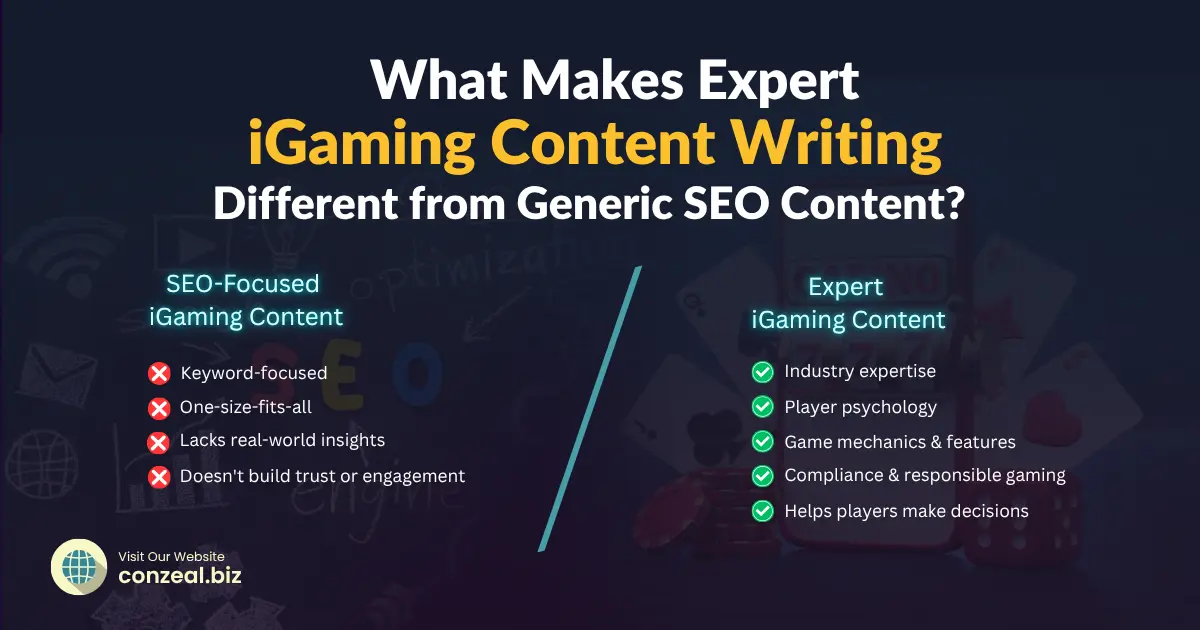
For additional guidance on creating useful, differentiated content rather than generic SEO articles, read our blog ”What makes expert iGaming content writing different from generic SEO content”.
Which Type of Sports Betting Content Should You Prioritize?
The right sports betting content writing mix depends on your sportsbook’s current goals, topical authority, and market opportunities. Prioritize content based on whether you need to build foundational coverage, capitalize on upcoming events, improve conversions, or establish authority in a specific sport or market. Use the table below to align your content priorities with your business situation.
| Business Situation | Content Priority |
|---|---|
|
New sportsbook with limited topical coverage |
Evergreen + sport-specific |
|
Major tournament approaching |
Event-driven + tournament content |
|
Strong organic traffic but weak conversion |
Commercial + decision-stage content |
|
Established sports authority |
Evergreen + event-driven + sport-specific |
|
New sport/market launch |
Sport-specific + evergreen + commercial |
|
Major breaking development |
Reactive content |
How to Measure Sports Betting Content Performance?
Measuring performance is a crucial part of sports betting SEO, helping sportsbooks understand which content attracts relevant traffic, builds search visibility, and contributes to conversions. Track these metrics alongside your igaming seo content performance to identify which topics deserve updates, expansion, or additional internal links.
- Impressions: Is the content gaining search visibility?
- Clicks and CTR: Are searchers choosing the result?
- Average position and query-level rankings: Which topics are gaining traction?
- Organic sessions and engagement: Is the content attracting relevant visitors?
- Assisted conversions: Does informational content contribute to later commercial actions?
Content freshness: Are event pages accurate and relevant?
Build a Sports Betting Content Ecosystem with ConZeal
A sportsbook needs an integrated approach: evergreen content for recurring needs, sport-specific content for depth, event-driven content for timely demand, and commercial pages for decision-stage queries.
Timing, market knowledge, and execution at the right time will help you retain your audience. To make things easier, you can connect ConZeal for expert sports betting content strategy and understand how modern-day sportsbook content moves.